
Step 05 · Protect
Staining & Topcoats
Breathable, log-specific stain and topcoat systems, color-tested on your logs and applied to the right film thickness.
What it is
The finish on a log home does two jobs at once: it blocks the sun and sheds water, but it also has to let moisture inside the logs escape. Finishes that seal too tightly, like most paints and many deck products, trap that moisture. The result is peeling, discoloration and eventually rot behind a film that looks fine from the driveway.
We use breathable, log-specific finish systems: a pigmented stain for UV protection and color, often followed by a clear topcoat that takes the weather. Pigment matters, because more pigment means more UV protection. Clear-only finishes on logs fade and gray quickly.
Staining and topcoats are the Protect step, the last thing that goes on in a full restoration and the first thing renewed during maintenance.
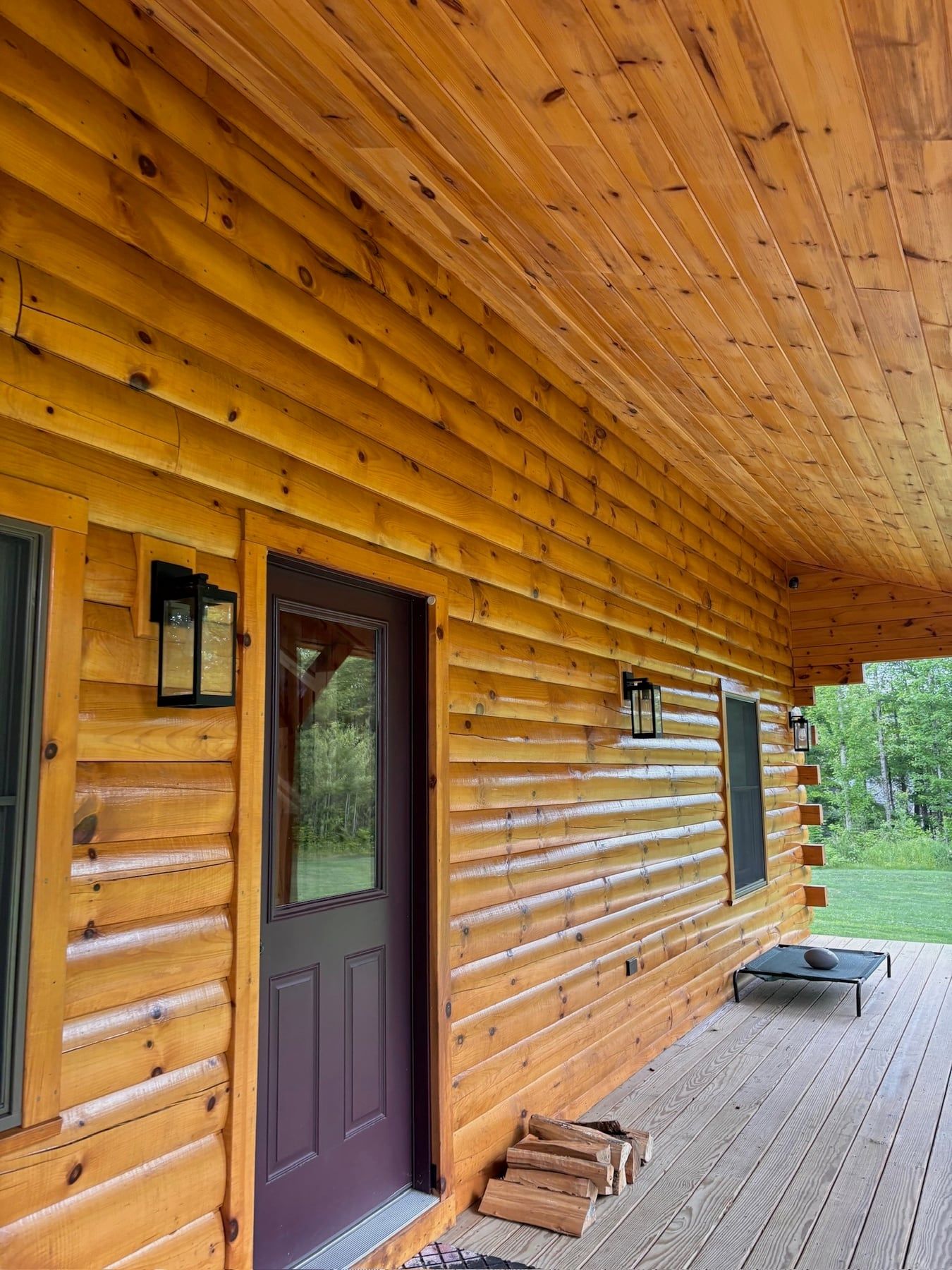
Signs you need it
When to call about staining & topcoats
- Water stops beading and soaks into the logs
- Color has faded, especially on south and west walls
- Logs are bare after stripping or repairs
- Stain is wearing unevenly from wall to wall
- It’s been 3–5 years since the last topcoat on sun-facing walls
How Cardi does it
Our method
- 01
Check moisture
No finish goes on until readings are under 19%. Staining wet logs traps moisture and leads to peeling and rot.
- 02
Test color on your logs
We apply sample sections on your actual wood. New, blasted and sanded wood all take color differently, so swatches on a card aren’t enough.
- 03
Apply the stain
Bare wood gets at least two coats, worked into checks, ends and texture with brush, back-brushing and spray as the product calls for.
- 04
Topcoat and record
A clear topcoat adds UV and water protection where the system calls for one. We record product, color, batch and coats so future maintenance matches.
Where it fits
Staining & topcoats is part of step 05: Protect
The finish is the log’s skin. It has to block UV and shed water while still letting moisture out of the wood.
FAQ
Staining & topcoats questions
What stain do you use?
We use breathable finish systems made specifically for log homes, not deck stains or paints. The exact product depends on your logs, exposure and the look you want. We’ll explain the options at the inspection.
Can you match my current color?
Usually, yes. We test on your logs and adjust until you approve. Keep in mind freshly stripped wood is lighter than weathered wood, so the "same" stain can look different on bare logs.
Do I need a topcoat?
Many log finish systems are designed with a clear topcoat that takes the brunt of UV and weather. Renewing the topcoat is far cheaper than redoing stain, which is why we recommend it on sun-facing walls every 3–5 years.
Projects
Jobs that included staining & topcoats
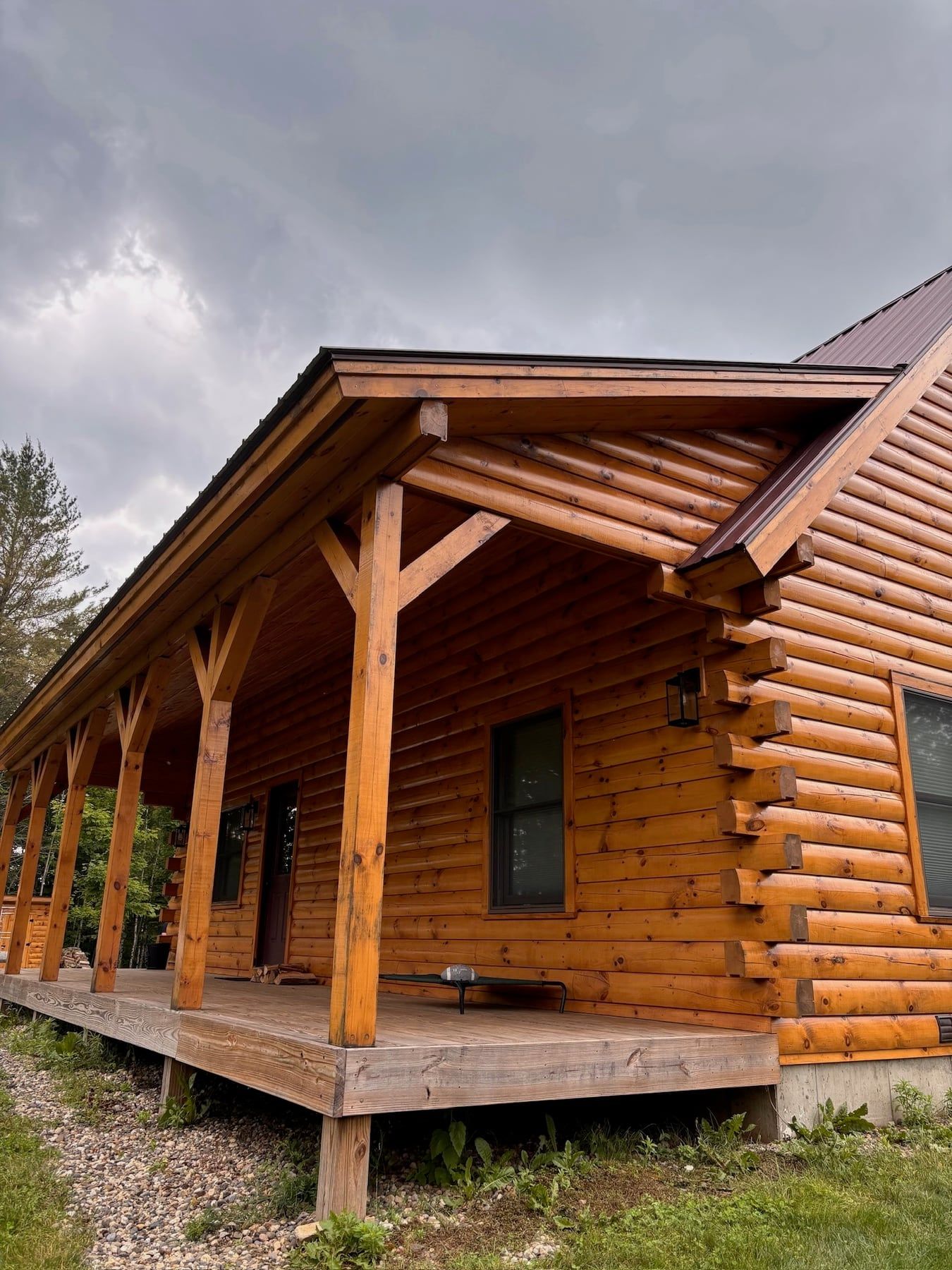
Golden Pine Finish
A log home, outdoor shower and porch ceiling cleaned and finished in a bright golden stain.
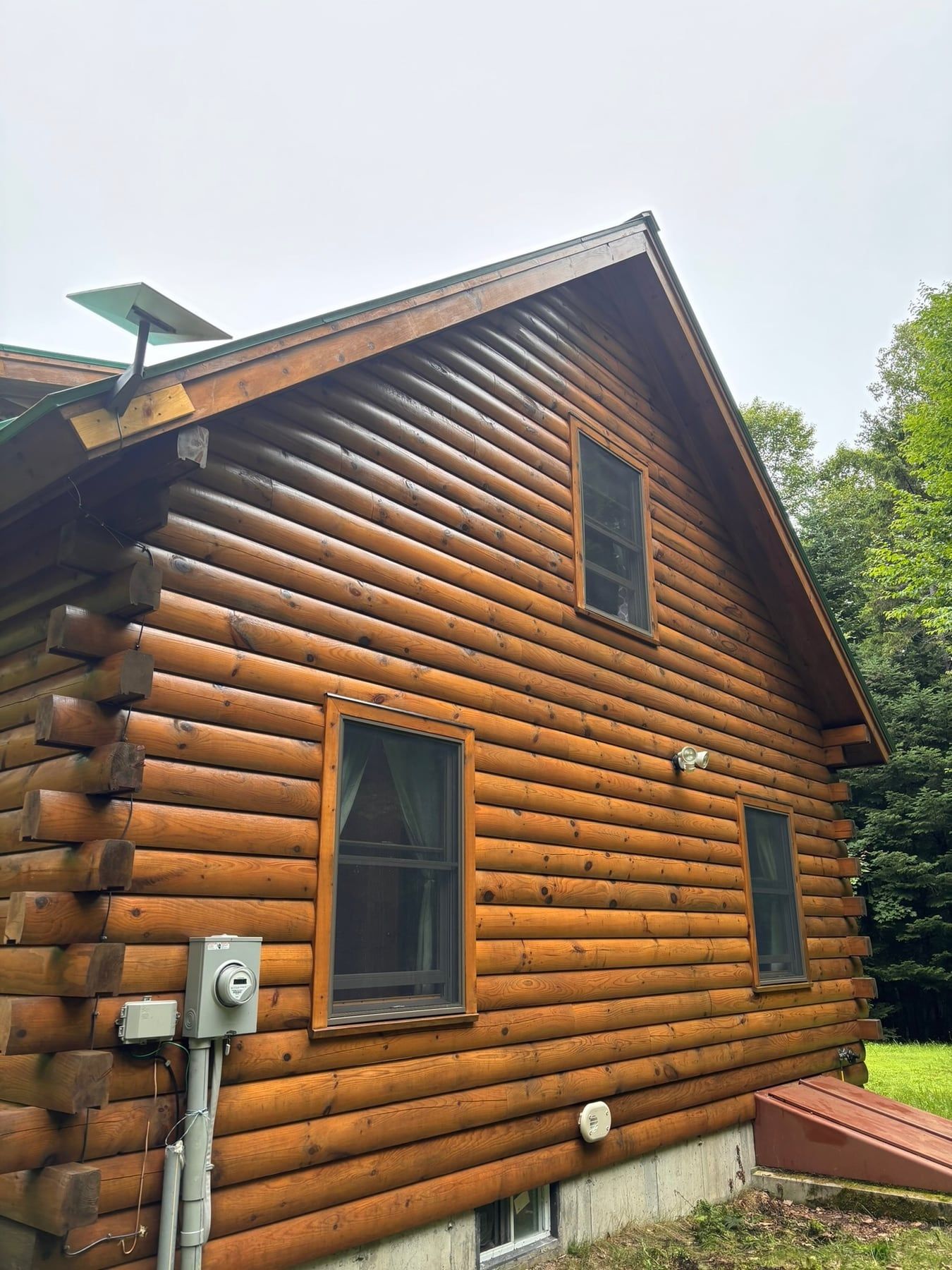
Gray to Gold
A sun-bleached, gray log home washed back to bright wood and restained in a warm golden finish.
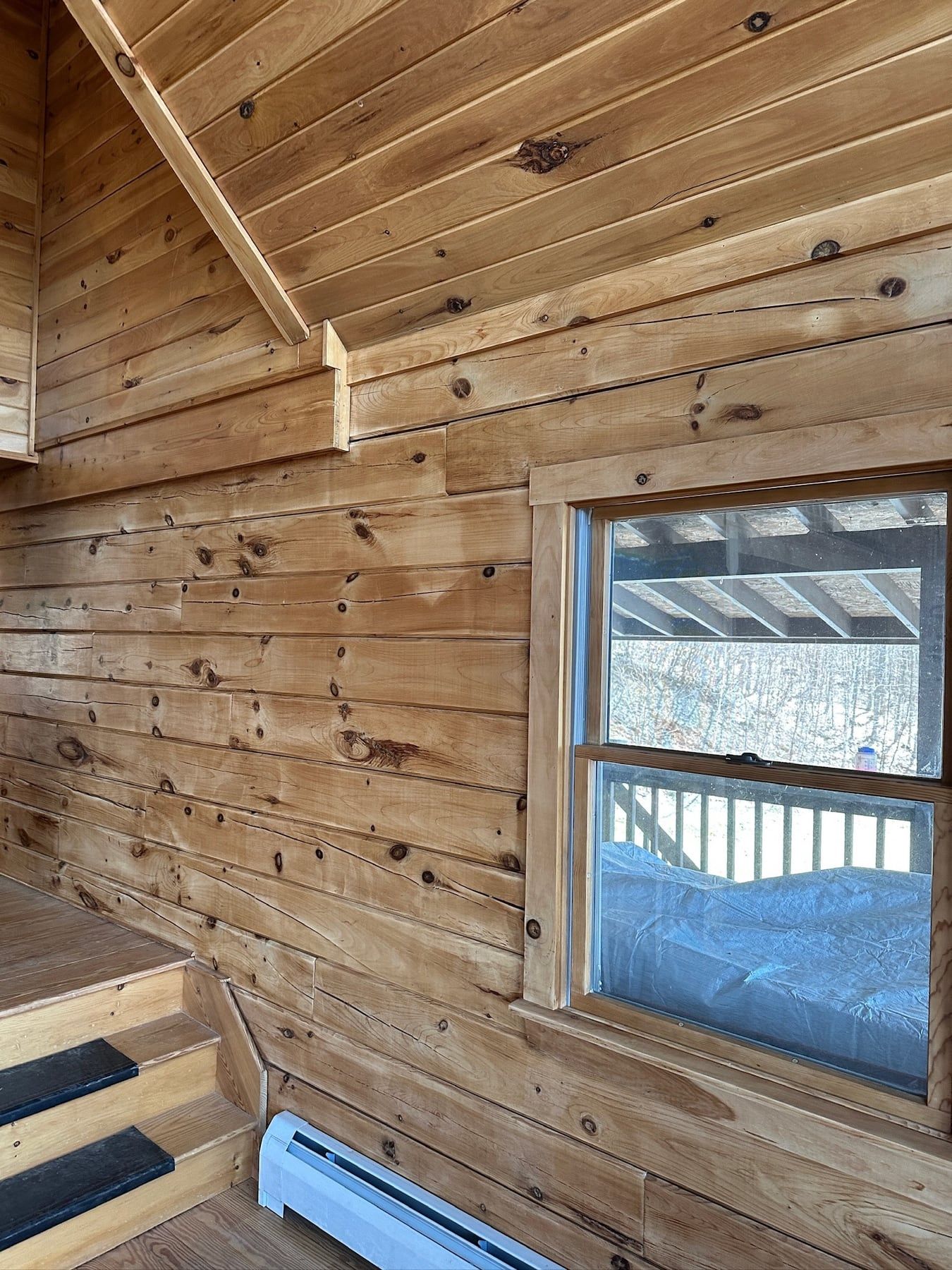
Interior Pine Refinish
Interior pine walls sanded back to bare wood and refinished, room by room.
Related services
Usually done alongside
Media Blasting
Strips failed stain, paint and gray UV damage off logs with a crushed media, without the gouging and fuzzing that harsh methods leave behind.
Learn more Step 04 · SealChinking & Caulking
Seals the joints between logs, the checks in them, and every corner and opening, with flexible products that move as logs move.
Learn more Step 01 · InspectInspections & Maintenance
Free first inspections with a written, wall-by-wall scope, plus yearly checkups and maintenance coats that keep restoration costs down.
Learn moreBook an inspection
Book a staining & topcoats inspection
That’s what the inspection is for. It’s free, it’s in writing, and it breaks the house down wall by wall, so you can decide what to do now and what can wait.