
Step 02 · Strip
Power Washing & Sanding
Low-pressure washing with log-safe cleaners, followed by sanding, for homes with lighter finish wear or where blasting isn’t the right fit.
What it is
Washing and sanding is the lighter way to strip and prep a log home. A log-safe cleaner breaks down dirt, mildew and loose, worn-out finish. A low-pressure rinse carries it away. Once the logs are dry, sanding smooths raised grain and blends worn areas so the new finish soaks in evenly.
It fits homes where the finish has faded but hasn’t failed. It’s also how we prep a log home for a maintenance coat on schedule, and the better choice where blasting isn’t practical, like tight sites, delicate interiors near open windows, or small sections.
It’s part of the Strip step. Whether we wash or blast, the goal is the same: a clean, sound, dry surface that will hold the next finish.
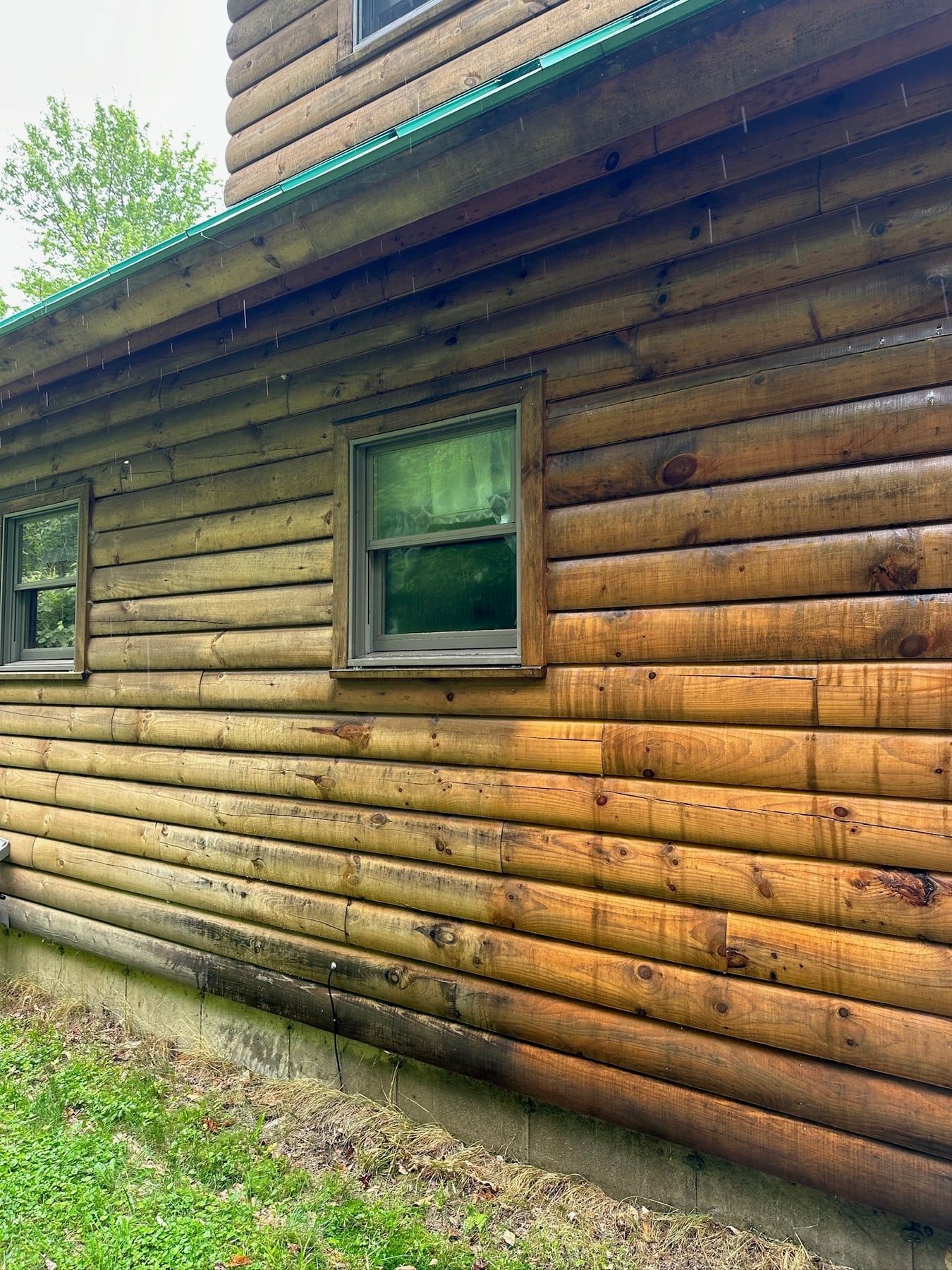
Signs you need it
When to call about washing & sanding
- Finish is faded but not peeling
- Mildew, algae or black spotting, especially on shaded walls
- Pollen, dirt and spider webs dulling the logs
- Light graying on sun-facing walls
- A maintenance coat is due and the surface needs prepping
How Cardi does it
Our method
- 01
Pre-wet and protect
Plants are pre-wet and covered, and outlets, lights and openings are protected. We confirm where runoff will go.
- 02
Apply log-safe cleaner
We use cleaners made for log homes, matched to the problem, whether mildew, tannin staining or general grime, and let them dwell the right amount of time.
- 03
Rinse at low pressure
Rinsing uses controlled, low pressure to lift the cleaner and loosened finish without raising or furring the grain or forcing water deep into checks.
- 04
Dry, then sand
Once dry, raised fibers and worn areas are sanded smooth so the new finish absorbs evenly. Readings must be under 19% before finishing.
Where it fits
Washing & sanding is part of step 02: Strip
New stain over old, failing stain fails with it. Getting to clean, bare wood is what lets everything after this step last.
FAQ
Washing & sanding questions
Why not just pressure wash at high pressure?
High pressure gouges soft earlywood, leaves a furry surface and drives water deep into the logs. That raises moisture and delays finishing, and the fuzz has to be sanded off anyway.
Is washing enough, or do I need blasting?
If the existing finish is intact and just tired, washing and sanding is often enough for a maintenance coat. If it’s peeling, layered or water soaks right in, it usually has to be stripped fully. The inspection settles it.
Do you use bleach?
We avoid chlorine bleach on logs. It can damage wood fibers and doesn’t treat mildew roots well. We use oxygen-based and purpose-made log cleaners instead.
Projects
Jobs that included washing & sanding
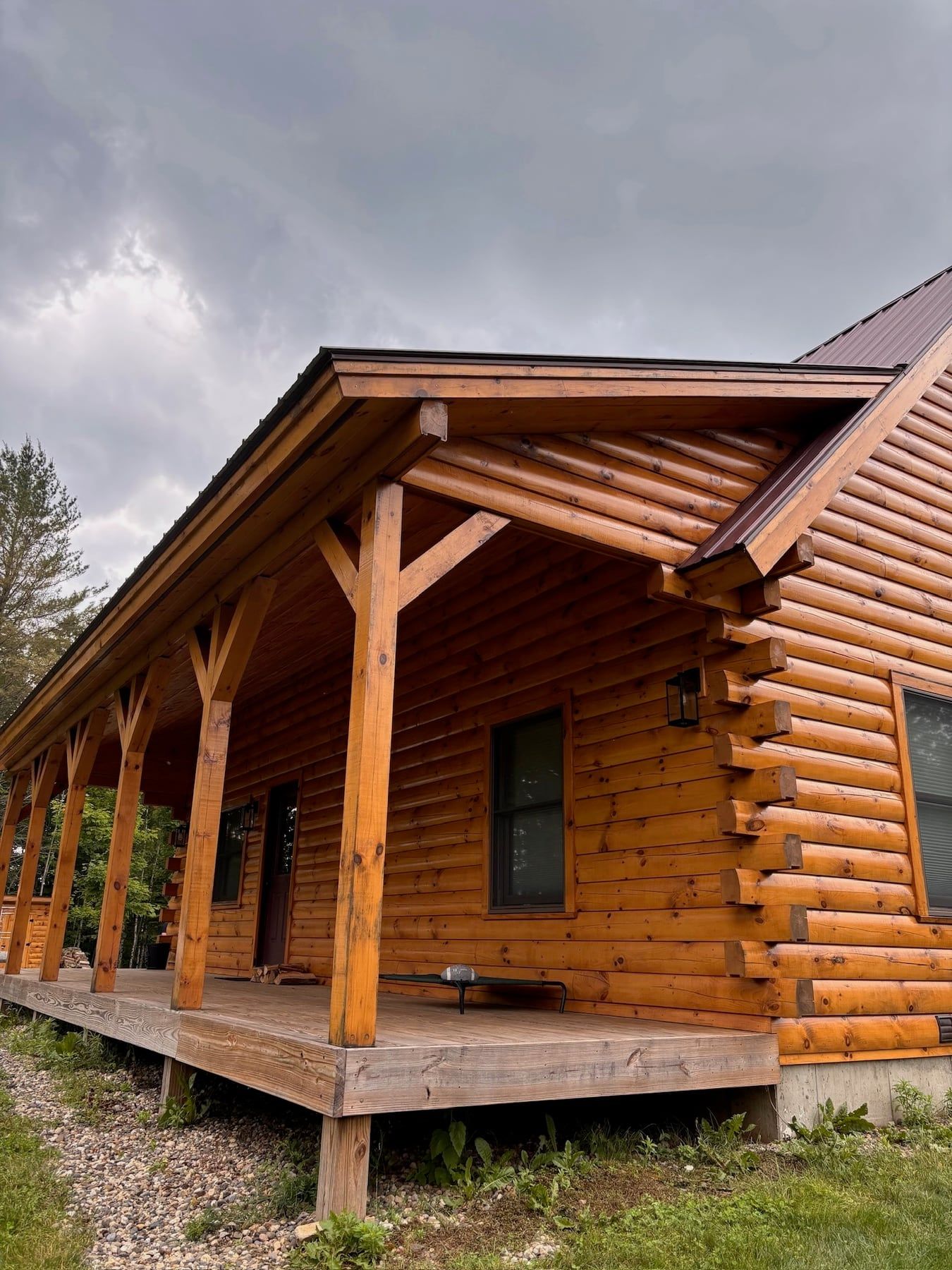
Golden Pine Finish
A log home, outdoor shower and porch ceiling cleaned and finished in a bright golden stain.
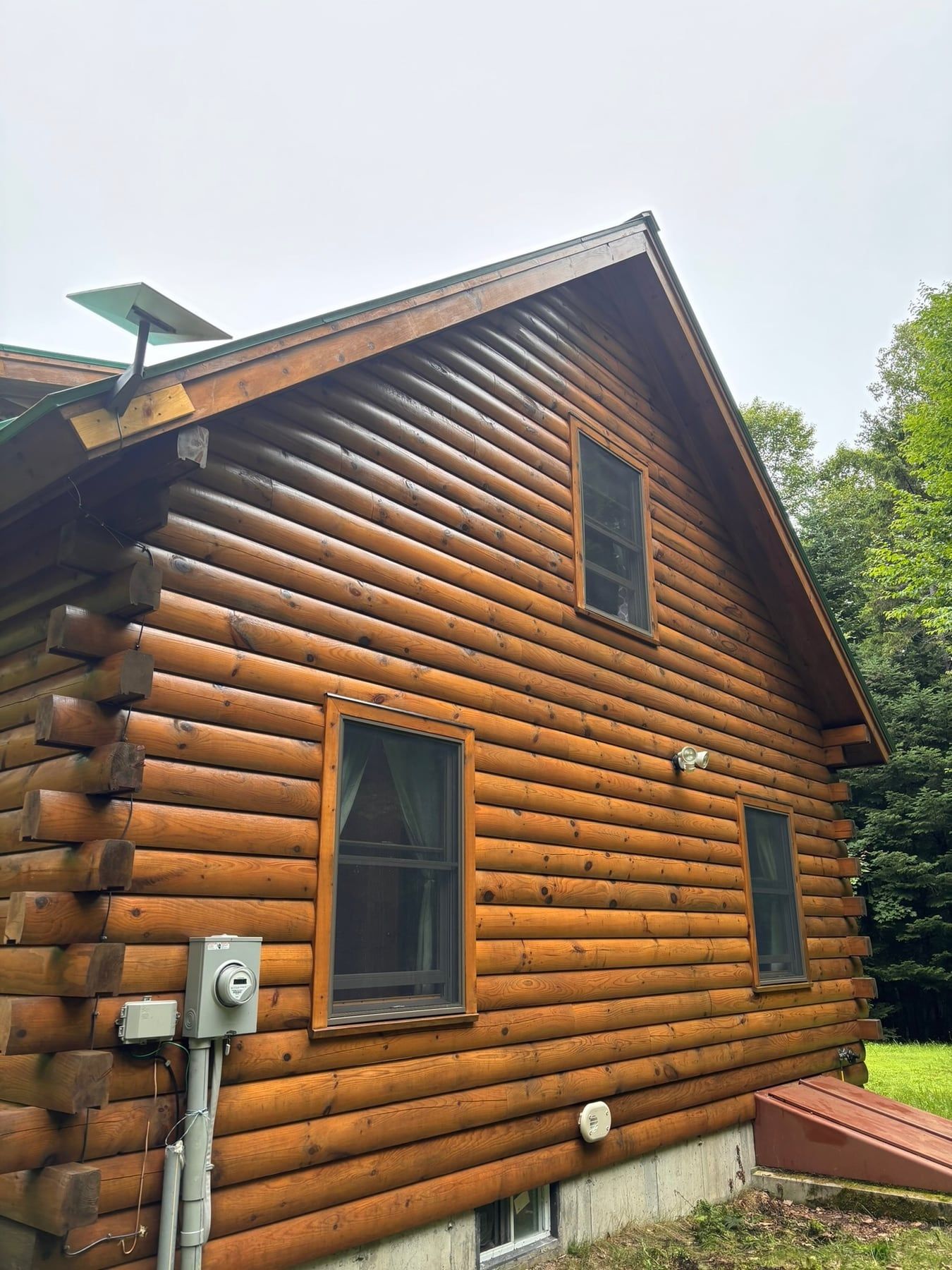
Gray to Gold
A sun-bleached, gray log home washed back to bright wood and restained in a warm golden finish.
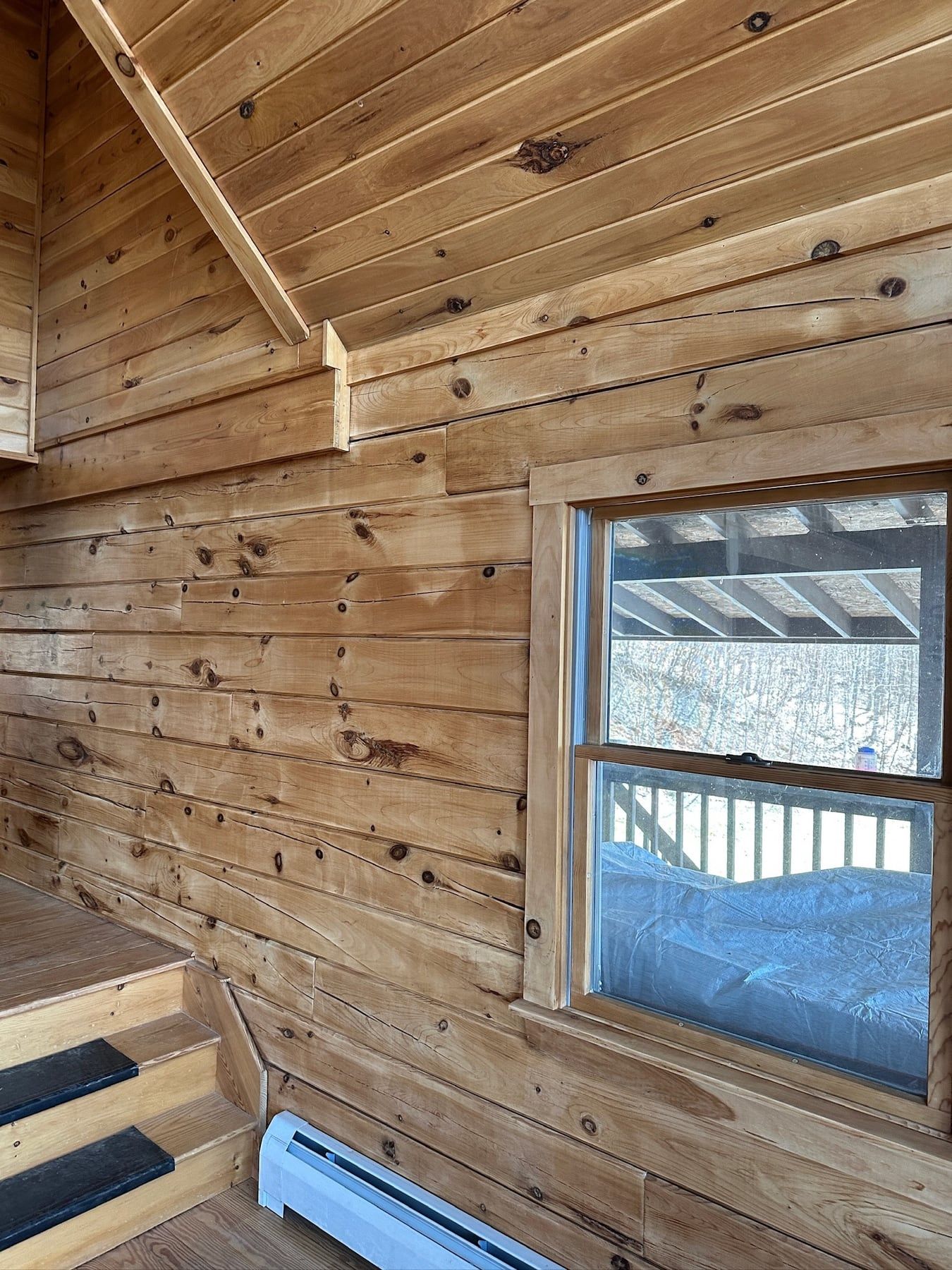
Interior Pine Refinish
Interior pine walls sanded back to bare wood and refinished, room by room.
Related services
Usually done alongside
Media Blasting
Strips failed stain, paint and gray UV damage off logs with a crushed media, without the gouging and fuzzing that harsh methods leave behind.
Learn more Step 05 · ProtectStaining & Topcoats
Breathable, log-specific stain and topcoat systems, color-tested on your logs and applied to the right film thickness.
Learn more Step 01 · InspectInspections & Maintenance
Free first inspections with a written, wall-by-wall scope, plus yearly checkups and maintenance coats that keep restoration costs down.
Learn moreFurther reading
Book an inspection
Book a washing & sanding inspection
That’s what the inspection is for. It’s free, it’s in writing, and it breaks the house down wall by wall, so you can decide what to do now and what can wait.